
We refer to Hashem in a cryptic fashion. “Hashem” literally translates to “the Name.” Our God was actually revealed to our forefathers — and to Moshe Rabbeinu — via many holy Names.
Hashem also revealed His holy Name to the entirety of the Jewish nation at Sinai. It was so overwhelming that the people could not tolerate its impact and power. Following the awesome experience of collectively receiving the first two commandments, the Israelites begged Moshe to relay the remainder of the commandments to them indirectly.
The most referred-to Name is called the Tetragrammaton, the “four-lettered” Name of Hashem. It is classically described as the Ineffable Name: something “too overwhelming to be expressed, or too awesome or sacred to be spoken” (Webster’s New World Dictionary).
Indeed, on one day of the year we recall the experience of hearing the Kohen Gadol utter the extended version of His most holy Name. We prostrate ourselves on the ground in deference to hearing only a recollection of its utterance.
However, there are other Names which we do pronounce, albeit under certain circumstances, such as when making a blessing. There are also Names which we avoid saying in certain places. An example of this is the word Shalom. The Gemara states:
Rav Hamnuna said in the name of Ulla: It is forbidden for a person to greet his friend with “shalom” in the bathhouse, because Shalom is one of the names of God, as it is stated: “And Gideon built there an altar to God and called it Hashem Shalom” (Shoftim 6:24). Therefore it is prohibited to utter the word shalom in a dishonorable place. Shabbos 10bShalom is thus regarded as one of the holy Names of Hashem. Of course, most understand it as “peace,” and as a greeting upon meeting and parting from a fellow Jew. Like Aharon, the Kohen Gadol, who “loved peace and pursued peace,” we greet one another with this holy word — but not in a place where it would be inappropriate.
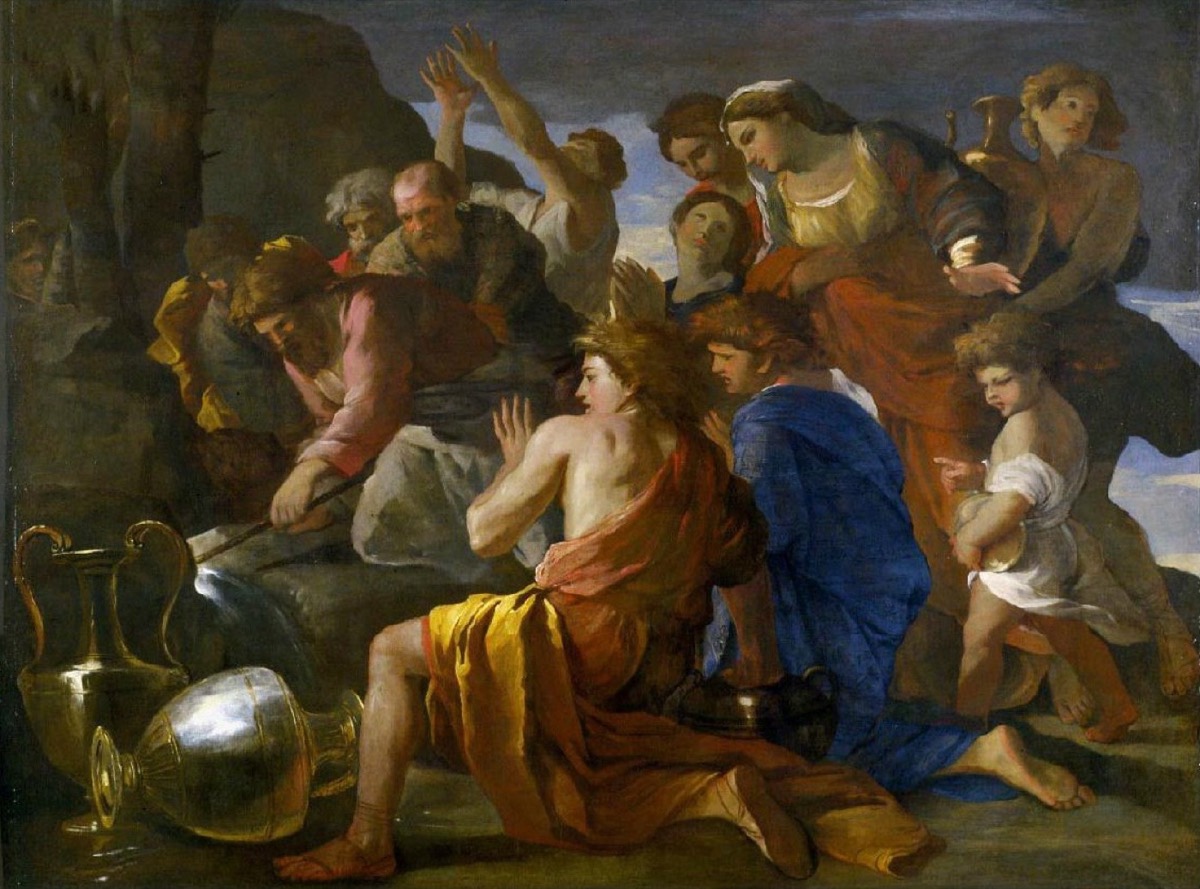
Following the miraculous crossing of the Sea of Reeds, the people grew defiant and restless. “They traveled for three days into the desert and did not find water” (Shemos 15:22). Chazal tell us that the Israelites were preoccupied with collecting the golden, glimmering booty washed up upon the shores, left behind by the drowned royal Egyptian cavalry. They should instead have directed themselves to Sinai, to receive the Torah. As water is likened to Torah, it was because of this episode that the Rabbis decreed that no three-day period should pass without the reading of the Torah. Hence we read from the Torah on Mondays and Thursdays.
But there is another component to that desert episode:
Shemos 15:24
וַיִּלֹּנוּ הָעָם עַל מֹשֶׁה לֵּאמֹר מַה נִּשְׁתֶּה
And the people grumbled against Moshe, saying, “What shall we drink?”
Shemos 15:25
וַיִּצְעַק אֶל ה׳ וַיּוֹרֵהוּ ה׳ עֵץ וַיַּשְׁלֵךְ אֶל הַמַּיִם וַיִּמְתְּקוּ הַמָּיִם שָׁם שָׂם לוֹ חֹק וּמִשְׁפָּט וְשָׁם נִסָּהוּ
He cried out to Hashem, and Hashem showed him a tree; he cast it into the water, and the water became sweet. There He established for them a statute and a law, and there He tested them.
Rabbeinu Bachya offers a profound insight into the peculiar phrase שָׁם שָׂם. He states that the angel of Esav was “there” — sham — and that his name is alluded to with this word. It phonetically aligns with the angel’s full name, which generally should not be articulated. This angel of evil pounces at every opportunity to strike Israel, whether the collective nation or the individual. He does so when they veer off the path of obedience and faith in Hashem. That is when they are most vulnerable.
Thus, the term שָׁם is a reference to the evil force which seeks to oppose Hashem’s will.
Sanhedrin 97b
אָמַר אַבָּיֵי: לָא פָּחֵית עָלְמָא מִתְּלָתִין וְשִׁיתָּא צַדִּיקֵי דִּמְקַבְּלִי אַפֵּי שְׁכִינָה בְּכׇל דָּרָא, שֶׁנֶּאֱמַר ״אַשְׁרֵי כׇּל חוֹכֵי לוֹ״ – ״לוֹ״ בְּגִימַטְרִיָּא תְּלָתִין וְשִׁיתָּא הָווּ
Abaye said: The world has no fewer than thirty-six righteous people in each generation who greet the Divine Presence, as it is stated: “Happy are all they who wait for Him [lo]” (Yeshayahu 30:18) — and lo has the numerical value of thirty-six. (See also Sukkah 45b.)
Abaye’s assertion that there are thirty-six righteous people in each generation who greet the Divine Presence — and upon whom the very existence of the world rests — is based on the word לוֹ, whose numerical value is thirty-six.
These thirty-six righteous souls serve to sustain the world in the face of all its evil. Without their presence the world could not continue to exist. They are known for their profound anavah — modesty, or lack of ego — and serve as a counterbalance to the ego-based reality which permeates this physical world.
Thus we have established how the term שָׁם refers to the evil force seeking to oppose Hashem’s will. We have also established how the term לוֹ corresponds to the thirty-six righteous people, whose modesty and mission sustain the world in the face of all the evil and ego which permeate it.
Bereishis 1:27
וַיִּבְרָא אֱלֹקִים אֶת הָאָדָם בְּצַלְמוֹ בְּצֶלֶם אֱלֹקִים בָּרָא אֹתוֹ זָכָר וּנְקֵבָה בָּרָא אֹתָם
And God created man in His image; in the image of God He created him; male and female He created them.
Creating man in the image of Hashem appears to present a contradiction. As Hashem has no image — no physicality — how can this be explained? Generally, Chazal tell us that this “image” represents man as possessing an intellect, like Hashem. We are thinking beings, capable of making rational decisions, and not subject to pure instinct, as are animals.
The Sforno notes a deeper insight on this passage. He states that this resemblance to Hashem refers to bechirah — choice, or free will. He goes on to say that Hashem’s choices are all for goodness, “whereas man’s are not always the good choice.”
Thus, when referring to Hashem with the Name Shalom — שָׁלוֹם — one may better understand the makings of this world and its purpose. שָׁלוֹם is a holy Name of Hashem, and Hashem clearly and explicitly possesses choice. We bless Hashem for having “chosen” us when called to the Torah, and the Torah repeatedly notes how Hashem will choose the holy place to rest His holiness:
Devarim 12:5
כִּי אִם אֶל הַמָּקוֹם אֲשֶׁר יִבְחַר ה׳ אֱלֹקֵיכֶם
…to the place that Hashem your God will choose…
Inherent in Hashem’s Name as שָׁלוֹם, one may extract a new and profound meaning. It represents an understanding that His Presence always chooses good. And as man was created in His image, man too has the capacity for choice. But man must continuously battle to make the choice for good, as the bad continuously stalks him. Hashem created this choice to allow us to discern, to make righteous choices, and thereby to grow ever closer to Him and emulate His ways — of choosing good.
שָׁלוֹם has the gematria of 376. עֵשָׂו has the gematria of 376.How can there possibly be an equivalence between “peace” and the one who seeks to destroy it? How can this be understood from Hashem’s Name as Shalom?
The two central letters of שָׁלוֹם are לוֹ. These can be said to represent the thirty-six righteous souls whose presence is essential for the world to exist. Without them, evil and ego would dominate, with nothing but chaos and confusion, and no opposition to counter it.
לוֹ is surrounded on both sides by the letters which spell out the name שָׁם. That name represents the evil angel of Esav, as noted above from Rabbeinu Bachya. The evil surrounds our inner good — on both sides!Indeed, we pray daily for Hashem to remove this evil force. It lurks behind us and in front of us, in the past and into the future — and שָׁלוֹם bears a numerical equivalence to it. It occupies both time and space. It is everywhere, and we must be on guard:
Maariv
וְהָסֵר שָׂטָן מִלְּפָנֵינוּ וּמֵאַחֲרֵינוּ
Remove the Satan from before us and from behind us.
We Jews are representatives of Hashem. We seek to walk in His ways and strive always to choose good. The instruction manual for achieving this goal is the Torah with all its teachings. It is the Eitz Chaim, the Tree of Life, which is what we must choose. It sustains us.
Thus we see that Hashem presents Himself as possessing both opposing forces — and He always chooses good. The ultimate objective is for there to be peace, that is, Shalom. This can only be actualized by His creations choosing correctly: aligning with Hashem’s will and practice of choosing good, and serving Hashem by choosing good as well.
We have been given the divine power of choice — free will. May we all choose well, and achieve the peace for which we all strive.
© J.S. Silverstein · Beor Panecha