
Shemos 15:18
ה׳ יִמְלֹךְ לְעֹלָם וָעֶד
Hashem will reign forever and ever.
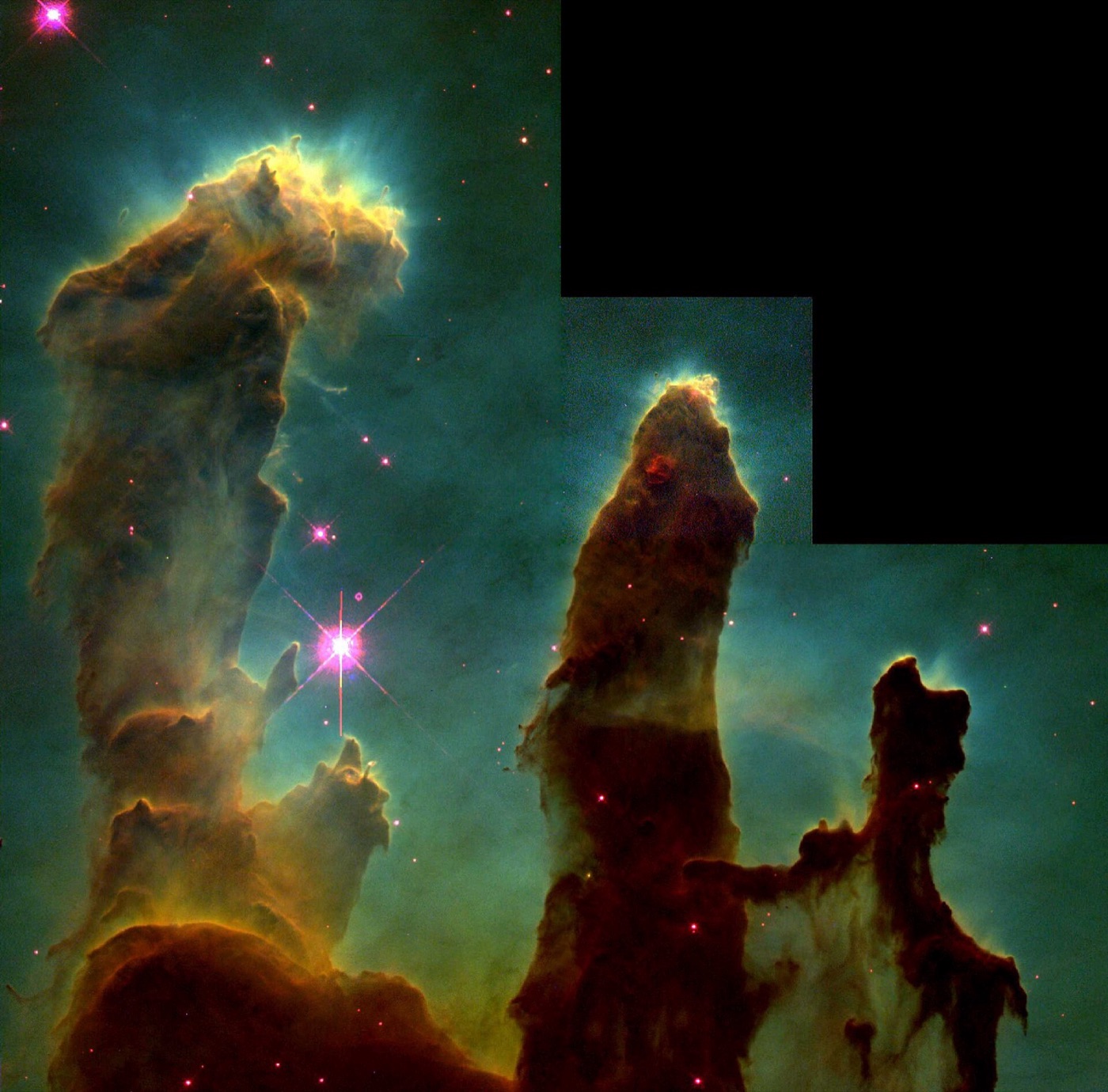
We often say the phrase without giving it much thought. We think of it as something ethereal, belonging to the Divine, the Infinite, the Ein Sof. “Forever and ever,” we translate it, and we mean Hashem’s eternal reign.
But a closer look at this oft-repeated phrase may reveal the physics hiding inside it.
Take the word l’olam. Its root, עוֹלָם, usually means “world.” Add the prefix lamed, and it doubles as the word for eternity: “forever.” Va’ed is also usually translated “forever.” Together the two words speak of time without end: l’olam va’ed, forever and ever.
Could the phrase describe something closer to the physics of the universe — a universe that seems, to us, infinite?
Olam means “world”: the physical part of reality, the space in which our reality is grounded.
Va’ed means, literally, “and until.” It can be likened to the limit in calculus: a quantity that approaches an end but never reaches it. That is the definition of never-ending, of eternal. This is the component of time.
Space and time
לְעוֹלָם וָעֶד · Shemos 15:18
So in saying this double phrase we reach toward the Divine’s eternity and all-pervasiveness: space and time.
In physics, space and time are joined in a single idea: spacetime, the three dimensions of space and the one dimension of time woven together into one four-dimensional whole. Until the beginning of the twentieth century, space (where things are) and time (when they happen) were thought of as entirely separate. Einstein’s special theory of relativity changed that: how fast time passes for an object depends on how fast it is moving relative to the one observing it, so time cannot be pulled apart from space.
The ancient phrase we say so often turns out to fit modern physics. Long before Einstein, space and time were already linked in our tefillos: l’olam va’ed. L’olam is the physical world, space; va’ed is time: the world, going on and on.
Va’ed even sounds like the English word “void,” as in “into the void,” endless space.
As we say these words in our daily tefillos, we can sense how our prayers carry an understanding of the universe, composed long before the twentieth century.
Time and space were created on the first day, by the Infinite. Before Creation there was neither time nor space; there was no need for them. Hashem created them for man: a place and a time in which to serve Him, the finite yearning for the Infinite.
© J.S. Silverstein · Beor Panecha