
Bamidbar 13:2
שְׁלַח־לְךָ אֲנָשִׁים וְיָתֻרוּ אֶת־אֶרֶץ כְּנַעַן
Send forth men to scout the land of Canaan.
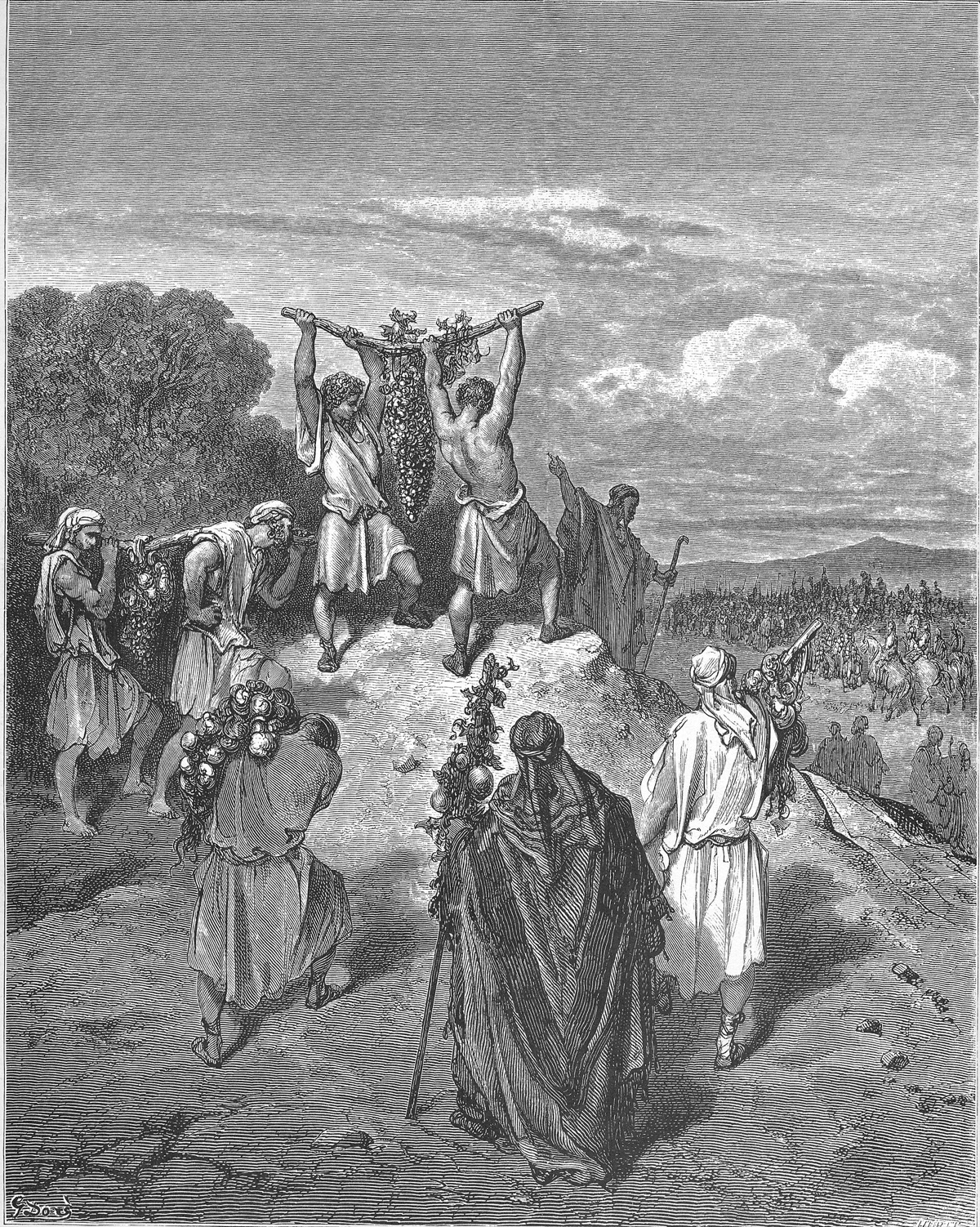
After naming the tribal leaders who were to scout the Land of Canaan, and giving them their instructions, the Torah adds an interesting detail:
Bamidbar 13:20
וְהַיָּמִים יְמֵי בִּכּוּרֵי עֲנָבִים
Now it was the season of the first ripe grapes.
The Gemara (Berachos 40a) discusses which fruit grew on the Eitz HaDaas, the Tree of Knowledge. Rabbi Yehudah says it was wheat; Rabbi Nechemiah, a fig; and Rabbi Meir says, gefen hayah — it was the vine. Rabbeinu Bachya cites the Midrash describing the fruit as grapes, anavim, and so say Kabbalistic sources.
When Chava was about to eat the fruit, she saw that it was good to eat, and desirable “to make one wise”:
Bereishis 3:6
וְנֶחְמָד הָעֵץ לְהַשְׂכִּיל
And the tree was desirable to make one wise.
When the spies returned from the Land, they brought back an enormous cluster of grapes from a place called Nachal Eshkol, the Valley of Eshkol. Eshkol means a cluster of grapes. The word appears four times in this short narrative.
Notice how the mind, the seat of intelligence — seichel, שֵׂכֶל — is like a cluster: scientists describe the brain as clusters of neurons working together. And eshkol, אֶשְׁכּוֹל, shares its letters with l’haskil, לְהַשְׂכִּיל — “to make wise.” Chava would thus have eaten from an eshkol anavim, a cluster of grapes, described to her as l’haskil, a means to wisdom.
Had the first couple not sinned, they would have lived in Gan Eden forever. There would have been no need for a Torah to be given to the world; they would have basked, unclothed, in the unfiltered divine light — the ziv haShechinah — forever.
Man was endowed with choice:
Bereishis 1:26
נַעֲשֶׂה אָדָם בְּצַלְמֵנוּ כִּדְמוּתֵנוּ
Let us make man in Our image, after Our likeness.
This pasuk has been misused by those who claim there is more than one god — chas v’shalom! To whom else would Hashem speak just before creating man? It was a teaching moment for mankind: when a great decision is at hand, consult others. Here Hashem consulted His ministering angels (Rashi).
The Sforno explains that “Our image” means that man, alone among all creatures, is divinely endowed with the ability to choose — free will. And, the Sforno notes, Hashem always chooses good; man can only aspire to emulate His ways.
The Chida offers a supporting insight on this pasuk:
Bamidbar 13:24
לַמָּקוֹם הַהוּא קָרָא נַחַל אֶשְׁכּוֹל
That place was called the Valley of Eshkol.
Citing Rabbeinu Ephraim, he says that this eshkol was the very cluster that belonged to Adam — who brought all of this about through his sin in the Garden. He also notes that the numerical value of אֶשְׁכּוֹל matches that of נָחָשׁ, the snake of the Garden. And he points to another “bitter wine,” in Moshe’s song of admonition:
Devarim 32:32
כִּי־מִגֶּפֶן סְדֹם גַּפְנָם וּמִשַּׁדְמֹת עֲמֹרָה עֲנָבֵמוֹ עִנְּבֵי־רוֹשׁ אַשְׁכְּלֹת מְרֹרֹת לָמוֹ
For their vine is of the vine of Sodom, of the fields of Gomorrah; their grapes are grapes of poison, their clusters are bitter.
The very next pasuk ties this poisonous wine to the instigator of it all — the snake:
Devarim 32:33
חֲמַת תַּנִּינִם יֵינָם וְרֹאשׁ פְּתָנִים אַכְזָר
Their wine is the venom of serpents, the cruel poison of asps.
For eating anavim, then, the first couple was exiled from paradise.
The Gemara (Avodah Zarah 5a) teaches that had it not been for the sin of the Golden Calf, we would have returned to the state of Adam and Chava before the sin; death as we know it would have been undone. It was the Satan who seduced Chava into eating the forbidden fruit — the anavim. The Ten Commandments were to be the tikun for that first sin, restoring reality to its original, pristine state.
The first Tablets contain 172 words. And 172 is the numerical value of עֲנָבִים, anavim.
The spies carried their oversized cluster of grapes on a pole between two men (Bamidbar 13:23; Sotah 34a). Rashi explains that their intent was to slander the Land, where they had seen towering giants. Their evil inclination cut them off from complete faith in Hashem’s promise that Israel would inherit the Land, and they spread slander.
The sin in the Garden and the sin of the Golden Calf forced a new reality on our connection to Hashem. Both were instigated by the Satan. As the Gemara says (Bava Basra 16a):
Bava Basra 16a
אָמַר רֵישׁ לָקִישׁ: הוּא שָׂטָן, הוּא יֵצֶר הָרָע, הוּא מַלְאַךְ הַמָּוֶת
Reish Lakish said: the Satan, the evil inclination and the Angel of Death are one and the same.
The same evil force lurked in all three cases: in the Garden with Chava, at Sinai with the Golden Calf, and with the spies and their display of the cluster.
The broken fragments of the first Tablets, together with the second Tablets, needed a container — the Ark — which the Levites carried on two poles:
Shemos 25:14
וְהֵבֵאתָ אֶת־הַבַּדִּים בַּטַּבָּעֹת עַל צַלְעֹת הָאָרֹן לָשֵׂאת אֶת־הָאָרֹן בָּהֶם
Insert the poles into the rings on the sides of the Ark, to carry the Ark with them.
The poles that carried the Ark are called badim. And the spies:
Bamidbar 13:23
וַיָּבֹאוּ עַד־נַחַל אֶשְׁכֹּל וַיִּכְרְתוּ מִשָּׁם זְמוֹרָה וְאֶשְׁכּוֹל עֲנָבִים אֶחָד וַיִּשָּׂאֻהוּ בַמּוֹט בִּשְׁנָיִם
They came to the Valley of Eshkol and cut down from there a branch with a single cluster of grapes, and carried it on a pole between two.
The pole that carried the grapes is called mot. Both the Ark of the Covenant and the great cluster were carried on poles between two bearers. בַמּוֹט has the numerical value of 57; בַּדִּים, counted with the kollel (one for the word itself), is 57 as well.
Carrying each — the Ark and the cluster — on poles between two represents the duality of our being. We strive to connect to Hashem, but the yetzer hara, in its many forms, competes endlessly with the yetzer tov for dominion.
Had the first couple not sinned with the anavim, an entirely different reality would have followed. Had Israel not sinned with the Golden Calf, we would have returned to the state of Adam and Chava.
As noted, the first Tablets were to be the tikun for the sin in the Garden, and their word count — 172 — equals the value of anavim, the grapevine’s fruit. 172 is also the value of עֵקֶב, eikev, which expresses a condition and its consequence, as in Parashas Eikev:
Devarim 7:12
וְהָיָה עֵקֶב תִּשְׁמְעוּן אֵת הַמִּשְׁפָּטִים הָאֵלֶּה… וְשָׁמַר ה׳ אֱלֹקֶיךָ לְךָ אֶת־הַבְּרִית
And it shall come to pass, because you heed these laws… that Hashem your God will keep the covenant with you.
This pasuk presents the consequence of keeping Hashem’s mitzvos: the conditions under which He will uphold the covenant — es habris. The first Tablets, the Luchos HaBris with their 172 words, were shattered when the Israelites lost faith in Moshe’s return, deceived by the angel of Esav, Samael, who conjured an image of Moshe having died.
The spies, in turn, brought back the anavim — 172 — as an act of bad faith, veering from the path of fidelity to Hashem. And it is taught that the angel of Esav is bound up with the grapes: take the letters that precede those of עֲנָבִים and, it is said, the name Samael emerges — Samael shutafo shel anavim, Samael is a partner of the grapes. The angel of Esav forever lurks behind the wine.
In each case, then, a pair of poles carried a symbolic 172 — eikev — expressing the consequences, and the requirement, of keeping Hashem’s mitzvos: eikev tishme’un.
At the end of our parashah comes a divine warning:
Bamidbar 15:39
וְלֹא־תָתוּרוּ אַחֲרֵי לְבַבְכֶם וְאַחֲרֵי עֵינֵיכֶם אֲשֶׁר־אַתֶּם זֹנִים אַחֲרֵיהֶם
Do not stray after your heart and after your eyes, after which you go astray.
The root of zonim, “straying,” is זן, with the value 57. In carrying both the Ark and the giant cluster, there was an element of straying, borne by a pair of poles — 57.
We are created in the image of Hashem — not in physical resemblance but, as the Sforno explains, in our ability to choose good over evil.
Tehillim 104:15
וְיַיִן יְשַׂמַּח לְבַב־אֱנוֹשׁ
And wine that gladdens the heart of man.
Yet the Gemara (Berachos 40a) gives Rabbi Meir’s reason for naming the vine as the Tree of Knowledge: nothing brings lamentation upon man like wine. Wine can gladden the heart; it can also cause great suffering. Wine embodies this duality — and with our Creator we share the faculty of choice, free will. Wine is a vessel of that duality.
The spies who carried the grapes — 172 — were condemned to die and never enter the Land. Only the next generation would carry the Ark, containing the broken fragments of the 172 words, into it. The Israelites who believed the spies’ evil report about Eretz Yisrael, rather than Hashem’s promise, remained in exile and died in the wilderness.
Adam and Chava, who ate of the forbidden vine, were deceived by the Satan. They were sent into exile from the paradise of Eden and sentenced to death for their misguided choice. They would no longer have access to the Eitz HaChayim — until Sinai, where we received the Tree of Life, the Torah. But for the Satan’s intervention there once again, we would have returned to a veritable Gan Eden.
The evil inclination took hold of the spies, and then of the Israelites, in their loss of faith in Hashem and in their ability to take the Land. The legacy of the angel of Esav is that of a stalking hunter: patient, waiting for the most opportune moment to strike. Such is the nature of the yetzer hara.
Whoever entered the Holy of Holies, where the Ark stood, did so on pain of death — as did anyone who touched Mount Sinai at the Revelation. And the kohanim are forbidden to drink wine before their service.
The parallel — poles carrying the anavim, poles carrying the Ark and all it held — leaves much to ponder about the choices we make and what we carry within our hearts. We must always be aware and on guard, for the evil force is always there, lurking and waiting. Eikev tishme’un. May we always strive toward holiness, choose good, and walk the righteous path.
L’Chaim!
© J.S. Silverstein · Beor Panecha