
Parashas Chukas presents the most enigmatic and mysterious laws of the Torah: the laws of the Red Heifer, the Para Adumah.
Bamidbar 19:2
זֹאת חֻקַּת הַתּוֹרָה אֲשֶׁר צִוָּה ה׳ לֵאמֹר
This is the decree of the Torah which Hashem commanded, saying…
The intricate and multifarious details include the requirement that the Para Adumah be completely burnt to ash. The ashes are then used to spiritually purify those who become tameh, ritually impure, from contact with the dead.
The opening discussion among Chazal agrees that one must not even attempt to understand or explain the mysterious nature of a chok. A chok is a Divine mandate and should remain unquestioned. But the burning question perplexed even the wisest of Jews, King Shlomo:
Koheles 7:23 (Yoma 14a)
אָמַרְתִּי אֶחְכָּמָה וְהִיא רְחוֹקָה מִמֶּנִּי
I said, “I will become wise” — but it is far from me.
This burning question centers on why the kohen who prepares the Cow himself becomes impure:
Chazal on the Para Adumah
מְטַמְּאָה אֶת הַטְּהוֹרִים וּמְטַהֶרֶת אֶת הַטְּמֵאִים
It makes the pure impure, while purifying the impure.
Only a kohen may burn the Cow in the preparation of the Red Heifer (see Mishnah Parah 3:6–7).
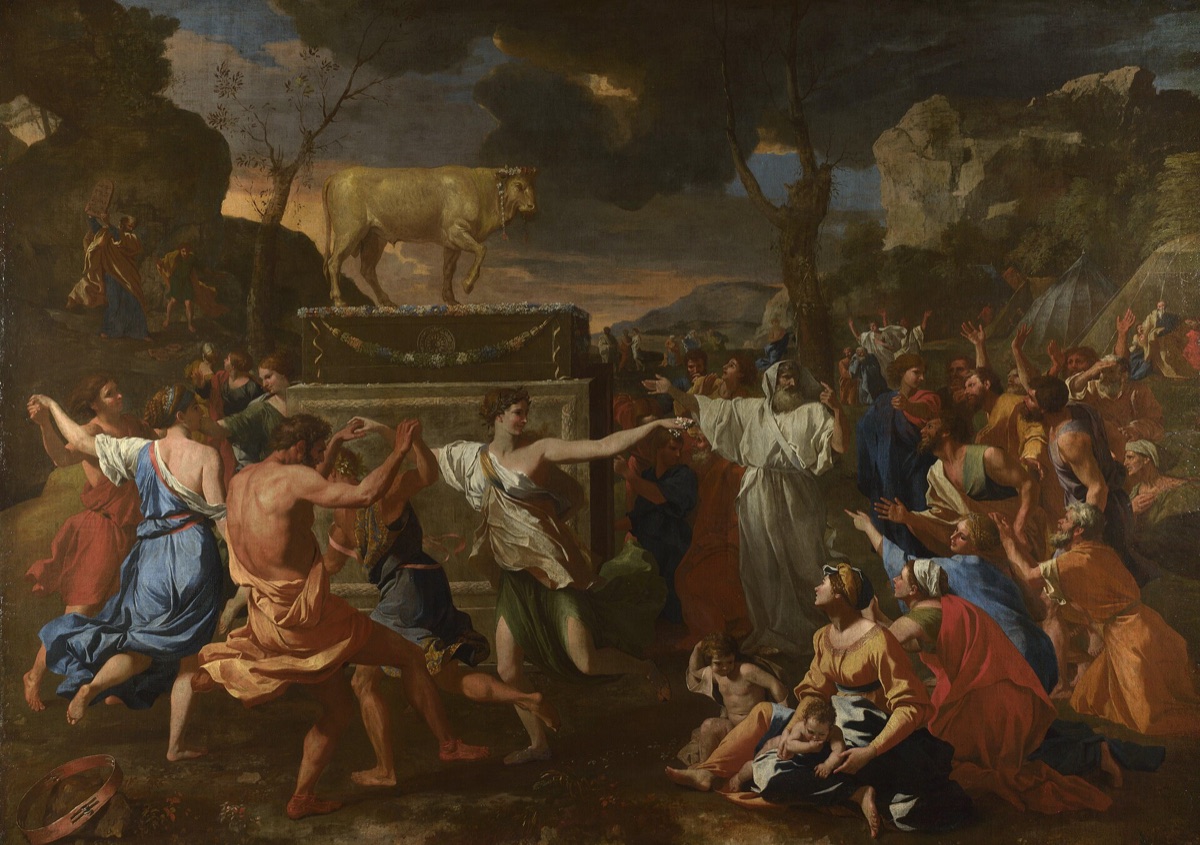
The Baal HaTurim notes (Bamidbar 19:2) that the gematria of Para Adumah matches the gematria of al avon ha’egel, “for the sin of the Calf.” He thus parallels the specific ritual elements of the Para Adumah: they serve as a tikun for the sin of the Egel HaZahav, the Golden Calf, and all its elements.
The purifying Cow, the Para Adumah, is famously said to “clean up” after the mess left by the younger Calf, the Egel HaZahav.
Despite the general prohibition against explaining or rationalizing the chok, Rashi nevertheless provides a list of parallels showing how the Cow ritual serves to mirror, and simultaneously atone for, the sin of the Calf. Quoting a Midrash Aggadah (Bamidbar 19:22), he draws direct parallels to the Chet HaEgel, atoning measure for measure, midah k’neged midah:
- The Cow must be without blemish, like Israel, free of sin until they became morally blemished with the Calf.
- The Cow must never have worn a yoke, an ol, as Israel cast off the yoke of Heaven with the sin of the Egel.
- The Cow must come from the people, as the gold came from the people to make the Calf.
- The Cow must be completely burned, as was the Calf.
- The ashes of the Cow must be kept forever, much as the sin of the Calf is never completely forgiven.
- Elazar HaKohen was tasked with preparing the Para Adumah, as his father Aaron prepared the Egel HaZahav.
And the list goes on. Yet the question remains unanswered:
Why do the kohanim who prepare the Cow themselves become tameh?
Although the directives for the Para Adumah were given to both Moshe and Aaron, it would be neither who prepared it. The task of preparing this very first Para Adumah (see Yoma 42b regarding subsequent ones) went to Aaron’s son, Elazar HaKohen. Rashi (Bamidbar 19:3) gives the reason: “Because Aaron made the Calf, this service was not given to him —”
Rashi, Bamidbar 19:3
שֶׁאֵין קַטֵּיגוֹר נַעֲשֶׂה סַנֵּיגוֹר
For a prosecutor does not become the defender.
This attribution of guilt to Aaron — with the task delegated, relegated, to the “junior” kohen — marks Aaron himself as the perpetrator, the “prosecutor,” of the sin. It provides the clue to answer the seemingly unanswerable question.
Aaron was the one who actually prepared the Egel. The masses awaiting Moshe’s return from atop the mountain miscounted the time of his return — by six hours. The evil angel of Esav seized this moment of doubt and conjured an image of a dead Moshe. The people lost faith and began to rebel. Aaron then hatched a plan, a delaying tactic: ask the people to hand over their gold. Surely they would refuse, and by then Moshe would return with the Tablets in hand. But instead of scoffing at the thought of relinquishing their precious metal, they gave it willingly. Aaron threw the gold into the kiln; the angel of Esav was lurking inside, and out came a Golden Calf.
What would have been, had Aaron not done this — had there been no Golden Calf?
Avodah Zarah 5a discusses this very matter. Resh Lakish quotes a Baraisa:
“Israel accepted the Torah so that the Malach HaMaves would no longer prevail over them.”
Shabbos 88b quotes Chananel bar Papa: “…the Torah has the power to kill and to give life.”
Indeed, had Israel not given up faith in Moshe and in Hashem at Sinai with the sin of the Calf — had they believed unwaveringly in Moshe’s return — we would have reverted to the status of Gan Eden before the sin of the Tree of Knowledge: immortality.
This is the essence of bechirah, man’s unique ability to choose. Choice was instituted following the sin of Adam and Chava. They chose to transgress Hashem’s command not to eat from the Tree of Knowledge of Good and Evil, and upon sinning they became subject to death — to mortality.
The Kli Yakar (Bamidbar 19:3) describes how tumas mes, the spiritual impurity caused by contact with a corpse, would have been completely eradicated with the acceptance of the Torah, if not for the sin of the Egel.
In the Garden, death was instituted. At Sinai, it was reinstituted.
Thus, if not for the sin of the Egel, there would have been no Malach HaMaves. And without the Malach HaMaves, there would be no need for a Para Adumah to purify from tumas mes — because there would no longer have been tumas mes. As the Kli Yakar puts it, the Egel caused tumas mes to be reinstituted.
So why does the kohen involved in preparing the Para Adumah himself become impure?
The kohen of each later generation who prepares the Para Adumah becomes tameh to mirror the actions of Aaron HaKohen, who prepared the Egel HaZahav — actions that brought back the Malach HaMaves. Just as the other rituals mirror other aspects of the Calf, this one mirrors how Aaron’s preparing the Golden Calf created a requirement for purification that would otherwise have been unnecessary.
Why would this remain a mystery?
Perhaps it is out of respect for the one known as rodef shalom, the pursuer of peace — the attribute that characterized Aaron HaKohen. Perhaps the mystery shrouded within this classic conundrum is there to obscure Aaron’s culpability in this most egregious of sins. Rendering it an insoluble mystery, obscuring it as a chok, is an act of Divine mercy, forgiveness and kindness to the man admired for pursuing peace.
In Parashas Shemini, the Ramban notes (Vayikra 9:3) that the command to offer an egel as a sin offering was given specifically and directly to Aaron — to enhance his prestige, and to atone for the sin of the Golden Calf. He was clearly forgiven: Hashem absolved Aaron of the status of kateigor, the instigator.
The question of this duality can still be raised: how can the very thing that purifies also contaminate? Aaron’s actions at Sinai in preparing the Golden Calf caused the Malach HaMaves to once again make Israel subject to the impurity of tumas mes. Aaron was forgiven, and honored with the inauguration of the Mishkan. The kohanim of later generations — themselves Israelites, subject to tumas mes — are charged with making the tikun that allows Israel to become pure.
To recapitulate: Aaron’s preparing of the Egel caused tumas mes to be reinstituted. The kohen who prepares the Para Adumah becomes tameh to reflect Aaron’s part in that original infraction. And the tikun, the parallel act that rectifies it, is to free Israel of this tumah by purifying them — with the Para Adumah.
The chok requires one to transcend the tendency toward reason. Pure and unwavering faith is required — demanded — by such an irrational decree. Faith and obedience were corrupted in the Garden. A correction was to occur at Sinai, but faith and obedience were corrupted there too. Tumas mes would now require purification with the ashes of a Red Heifer, prepared by descendants of the Kohen who caused tumas mes to be reinstated.
Had Adam chosen correctly, there would have been no tumas mes. Had Israel chosen correctly and not lost faith at the foot of Sinai, there would have been no Golden Calf:
No Malach HaMaves, no tumas mes, and no need for a Para Adumah.
The Mishnah (Parah 3:5; see Rabbeinu Bachya on Zos Chukas) records the legacy of nine Red Heifers prepared. The tenth is to be prepared by Mashiach.
May he come soon, in our days.
An extended edition of Lifting the Shroud, with more on Aaron’s forgiveness and his passing by a Divine kiss, is coming for Beor Panecha+ members.
© J.S. Silverstein · Beor Panecha