
On Yom Kippur we read from the Prophets about a large, sinning population in Ninveh, where Yonah HaNavi was sent by Hashem with the directive to get the people to repent. The narrative details how the boat he took to avoid executing his mission was threatened with a deadly aquatic storm.
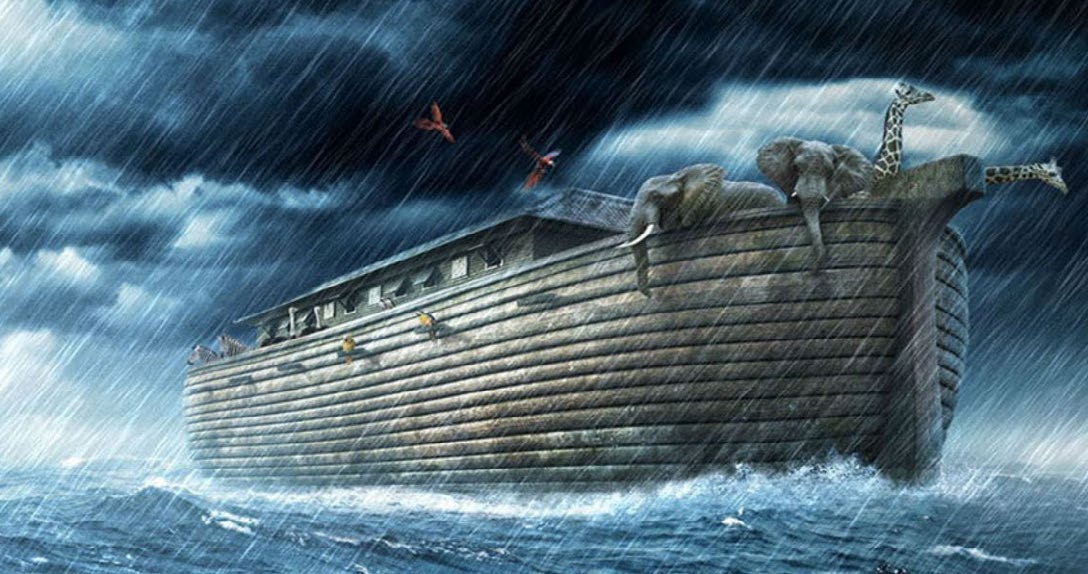
Noah was commanded to build an Ark — a taiva. It took him 120 years (the span of Moshe Rabbeinu’s life, who also took refuge in, and was himself given a new life after being preserved in, a taiva).
Hashem provided Noah with clear directions and precise dimensions for the Ark. These directions included a particular provision to make a Tzohar, a window of sorts. The Talmud (Sanhedrin 108b) presents two opinions as to what this Tzohar may have been: a window for the passengers to provide an opening to the outside, albeit stormy, exterior. Alternately, the Gemara continues, “Rabbi Yochanan says that the Holy One, Blessed be He, said to Noah: Set precious stones and jewels in the Ark so that they will shine for you as the afternoon [tzohorayim] sun.”
The rains would fall for forty days and forty nights — the same time span Moshe Rabbeinu was atop Mount Sinai receiving the Torah, homiletically compared to water.
The survivors of the Flood would remain stranded, floating on the Ark for nearly a year. There would be no mountaintops for many months to offer hope for a docking point. There were but limited provisions on board to sustain them. This span of time may well have seemed like an eternity.
Even as Hashem had given His word, it may certainly have entered a passenger’s mind to doubt a positive outcome, following the catastrophic deluge and extended time spent floating aimlessly atop an endless, ominous and foreboding sea.
Recall now two recognizable elements from the Noah story: the Ark, and the promising rainbow. The Ark housed them. The rainbow would serve as a symbol — a sign — a formal Covenant to the world that Hashem would never again employ a flood to destroy it. In fact, the term for “Covenant — Bris” is articulated by Hashem in Bereishis 9 no less than seven times, as it relates to His promise to never again destroy the world with a flood.
One may wonder why a “sign” was even necessary. Would not the Word of Hashem have sufficed? And why specifically a rainbow?
Realize that the only observers of this rainbow would be the inhabitants of the Ark. What possible significance could a rainbow in particular hold for these, the survivors of the Great Deluge?
After the torrential rains stopped after forty long days and nights, sunlight would finally return. This light would only appear to the survivors aboard the Ark cast through that Tzohar, that special window Hashem commanded Noah to build.
Recall how Rabbi Yochanan describes the window — the Tzohar — as containing “precious stones and jewels so that they will shine for you as the afternoon [tzohorayim] sun.” The sun would return, and that window would serve as their only source of illumination for the long and seemingly endless duration.
Sunlight shining through precious stones refracts. The light yielded on the other side of the precious stones would cast the refracted spectrum of the white sunlight. A virtual rainbow would appear on the other side.
This virtual rainbow would have been the very light under which the passengers inside the Ark would have been bathed — illuminated during the remainder of their seemingly endless voyage. It may have seemed bizarre to them at the time, basking daily in a rainbow of light, wondering if it would ever end. But it finally did.
After docking and exiting the Ark, they received a “sign” from above, from Hashem, that He would never again destroy the world via a flood. The sign of the Covenant — the Bris — was nothing other than the refracted spectrum of sun-generated white light, known as “the rainbow.”
As the survivors of the Flood floated for nearly a year atop the world on the most famous of all lifeboats, they experienced a refracted light source, providing colorful hope of a brighter future. Indeed, if a future at all…
When they did finally dock, they experienced a rainbow in a completely different light than most contemporary readers possibly could. They intimately recognized the very light which illuminated them for what may have seemed like an eternity. This external rainbow served as a covenant to assure them that such a deluge would never again occur. They now could reflect on this recognizable spectrum with a different perspective — a retrospective.
This particular spectacle was selected to remind them that Hashem’s presence was with them all along — within and without. And this very characteristic spectrum of light, which kept them out of the darkness while saving their lives, would serve as a permanent Sign, a Bris, that such a deluge would never happen again.
The rainbow of promise would remind them that His light was with them all along the journey. Just as it is for us.
We experience different lights and frequencies of energy throughout our lives. Indeed, it is the nature of our existence. We must know, however, that all different hues and intensities emanate from the One light.
We should never forget this message, even during the darkest hour.
© J.S. Silverstein · Beor Panecha