
On Yom Kippur, we read the Haftorah which tells the tale of Yonah and the whale. Yonah HaNavi was sent by Hashem with the directive to get the people of Ninveh to repent. Yonah disobeyed Hashem’s directive and took another route. The craft he boarded strangely became threatened by a tempestuous storm, which affected only that boat.
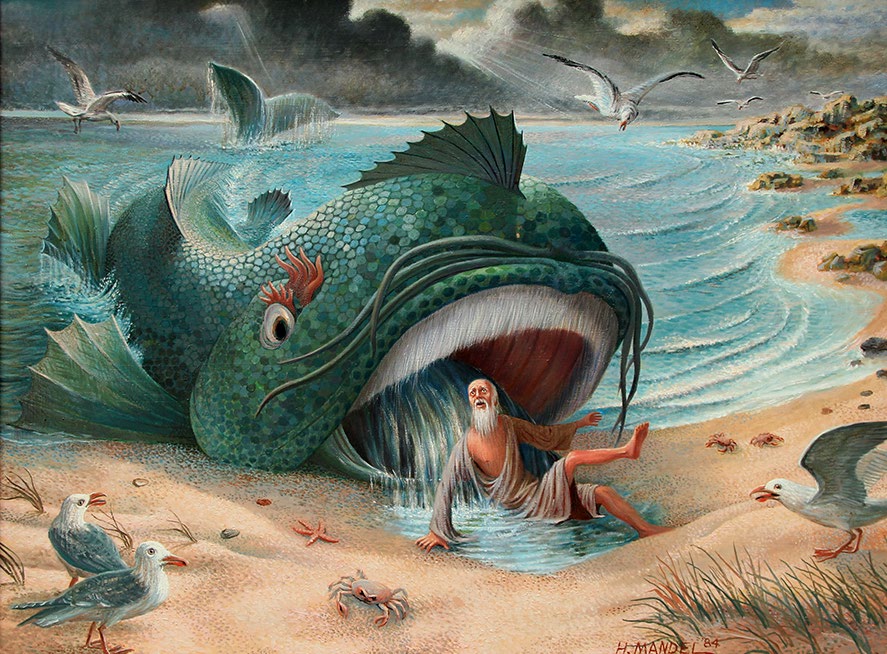
After it was determined by lottery that Yonah was the cause of the storm, he jumped off the boat, and the waters subsided.
Parashas Noach discusses how the land became corrupted with a large sinning population. The earth would ultimately be destroyed by a deadly aquatic storm. It features a character sent on a mission to determine if the “waters had yet subsided.” HaYonah, the dove, obediently executed the mission, returning first for “not finding a resting place for the palm of its feet” (Bereishis 8:9) — kaf raglah. This latter detail, of the bird’s position relative to its environment, seems superfluous, as a bird cannot perch or stand without its feet.
The disobedient prophet Yonah was commanded, “Kum, lech!” — get up and go to Ninveh (Yonah 1:2). In fact, the verb “get up” is mentioned no less than five times as it relates to Yonah’s actions, with yarad — his descending — four times. Yonah’s most famous descent was when he “goes down to the bottom of the ship, vayishkav vayeiradam” — where he lay down and went to sleep, as the boat stirred tempestuously. Here too, the detail of his body relative to his environment — lying down — seems superfluous. He clearly should have been doing something else considering the dire circumstance.
Thus, we have two messengers with the same name — Yonah — sent on their own respective missions, surrounded by water, where each narrative offers the somewhat odd detail describing their physical position relative to their environment, specifically as it relates to executing their job. The Yonah bird would have been standing; the Yonah prophet was lying down. Indeed, this detail represents two contrasting methods of executing one’s appointed task: standing up, or lying down on the job.
The gematria of kaf raglah, “the palm of the foot,” equals 338. The gematria of vayishkav, “he lay down,” equals 338.
The most basic representation of 338 is Shin, Lamed, Ches. This spells out the root of the word shelach, “send.” A shaliach is a messenger.
Each of these messengers was sent to perform a specific mission. One was prepared to stand upright in executing its job; the other was lying down on the job.
It can be said that each of us has our own unique mission, our own message to deliver, utilizing our own specific skills and gifts with which we are endowed. How we approach each mission — indeed, our own lives — depends on our physical execution of the task, which in turn begins with our own will, our own machshavah, or yetzer. It would be easy to roll over and snooze. It is much harder to persist until you make your stand, and find your proper place to execute your mission.
May we all continue to gain clarity in knowing our own individual mission, and persist in fulfilling Hashem’s purpose for us in this physical realm.
© J.S. Silverstein · Beor Panecha